
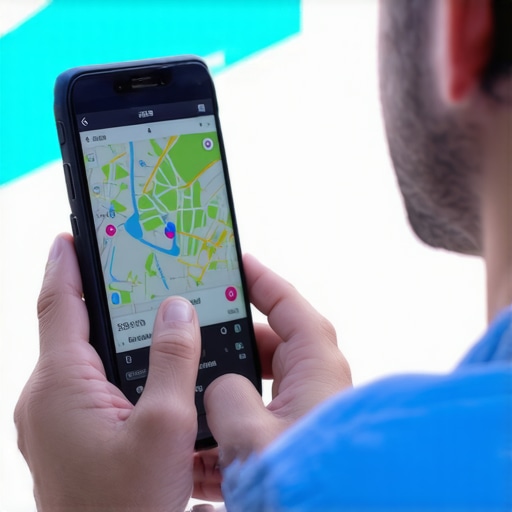
5 Simple Fixes That Turn Bored Map Browsers Into Real Phone Calls
You open your Google Business Profile (GBP) Performance tab and see it: 5,000 views this month. Your heart skips a beat, but then you look at your phone. It’s silent. Your lead tracking sheet is empty. You’ve built what I call a “Ghost Town” listing – a profile that everyone sees, but nobody touches. In the world of Local SEO, this is the ultimate frustration. You are winning the battle for visibility but losing the war for revenue.
As a Google Business Profile Product Expert and Local SEO Consultant, I see this every day. Most business owners and even many SEO professionals are obsessed with “ranking” – getting into that coveted top 3 Map Pack. But in 2026, ranking is only half the battle. The real game-changer is CTR SEO. It’s about “viability” over “visibility.” If you are in the top 3 but the business at spot #4 looks more trustworthy, more active, and easier to contact, you are just a billboard that people drive past without stopping.
Google’s 2026 algorithm has evolved. It no longer just looks at keywords and proximity; it looks at engagement signals. It monitors how users interact with your pin, how long they dwell on your photos, and whether they actually click that “Call” button. If people see your listing and immediately bounce back to the search results, Google notes that your business didn’t satisfy the user’s intent. To rank higher on google maps today, you must optimize for the human click as much as the search engine crawl. Here are five simple fixes to turn those bored map browsers into real phone calls.
1. The Category & Service Alignment Fix
One of the most common reasons a listing gets views but no calls is a fundamental mismatch in intent. If you choose the wrong primary category, you might show up for broad searches, but you won’t be relevant to the person ready to buy. According to the recent study, “How Your Map Category Choice Controls 2026 CTR,” relevance is the very first filter a browser uses to decide whether to click “Call” or keep scrolling.
Many businesses set their primary category once and never look at it again. However, Google frequently updates its category list. If you are a “Plumber” but you specialize in “Emergency Drain Cleaning,” and you haven’t audited your secondary categories or filled out your custom services, you are missing out on high-intent traffic. Professional google business profile seo involves a deep dive into these categories to ensure they align with what users are actually typing into the search bar in 2026.
The Fix: Audit your primary and secondary categories. Ensure your primary category is the one that most closely matches your most profitable service. Don’t stop there. Go into the “Services” section and move beyond the pre-defined list. Create custom service descriptions that use natural language to explain why a customer should choose you. This depth of information feeds Google’s AI summaries, making your listing appear more authoritative. This level of detail is a key part of How ‘Search Within’ Interaction Depth Fixes 2026 Local CTR, as it encourages users to stay on your profile longer.
2. Visual Sentiment & Interaction Depth
In 2026, the “Photo” section of your Google Business Profile is no longer just a gallery; it’s a conversion engine. We’ve moved past the era where a few grainy shots of your office sufficed. Google now tracks “Photo Scrolling Depth” – a metric that measures how many photos a user views and how long they spend on each one. High dwell time on photos is a massive signal to Google that your business is high-quality.
The problem is that many listings are filled with stock photos or “cold” images of empty buildings. These don’t trigger phone calls. To turn a browser into a lead, you need “Sentiment-rich” photos. These are images that evoke a feeling of trust, relief, or excitement. Think: a happy family in their newly renovated kitchen, a technician smiling while handing over a set of keys, or a “before and after” shot that clearly demonstrates a solved problem.
The Fix: Delete the stock photos immediately. They kill trust. Replace them with high-resolution, real-world images. Focus on the “View Outside” and “At Work” categories. Google’s AI can now recognize objects and even “sentiment” within images. When you use local seo tools to analyze your competitors, you’ll likely find that the ones winning the most calls are the ones with the highest user interaction on their galleries. For more specific tactics, check out 5 Photo Interaction Fixes to Boost 2026 Local CTR SEO.
3. The Review Response “Speed & Keyword” Loop
Reviews are the social proof that bridges the gap between “I see you” and “I trust you.” But most businesses treat review management as a chore rather than a ranking signal. In 2026, “The Speed of Review Scrolling” and the presence of keywords within review responses are critical. When a user searches for a specific term, like “emergency roofing,” Google will often highlight reviews that mention that term. If your responses also mirror those keywords, you create a “relevancy loop” that both Google and the user love.
Furthermore, a fast response time signals to a potential customer that you are active and attentive. If they see you responded to a review from two hours ago, they are much more likely to believe you will answer the phone when they call. This is where a professional google maps ranking service can provide immense value by maintaining a consistent, keyword-optimized response strategy that scales as your business grows.
The Fix: Set a goal to respond to every review – positive or negative – within 24 hours. In your response, don’t just say “Thanks for the review.” Say, “Thanks for the review, Sarah! We were happy to help with your emergency water heater repair in Phoenix.” This naturally weaves in your services and location without feeling like spam. This strategy is essential because Why ‘Review Search’ Clicks are a Massive Local CTR Signal in 2026 is becoming a dominant factor in how Google determines who gets the top spot.
4. Activating the “High-Intent” Buttons
The “Call” button is the holy grail, but it’s not the only way people want to communicate in 2026. Many “bored map browsers” are actually “shy map browsers” or “busy map browsers.” They might not want to make a phone call while they are in a meeting or sitting on a bus. If the only option you give them is a phone number, you are losing a significant percentage of your potential leads.
Google has introduced several “High-Intent” buttons like “Request a Quote,” “Message,” and “Check Availability.” These buttons reduce the friction of the initial contact. If a user clicks “Request a Quote,” Google sees that as a high-value engagement signal, which helps rank google business profile listings higher over time. If your profile is just a static phone number and a website link, you are failing the “Call vs. Website” click ratio test.
The Fix: Enable Google Messaging immediately. Set up “Frequently Asked Questions” in the messaging interface so users can get instant answers. If you are in a service industry, activate the “Request a Quote” button. These features are essentially google maps lead generation tools built directly into your profile. By providing multiple ways to connect, you satisfy different user preferences. This is backed by data showing Why ‘Check Availability’ Clicks Now Dominate Local Ranking [2026 Data].
5. The Proximity & Movement Signal
This is the most advanced “fix” because it involves understanding how Google uses real-world GPS data. In 2026, Google doesn’t just care about where your business is located; it cares about how people move toward it. This is known as “The Hidden Impact of Mobile Movement Patterns on Your Local Map Rank.” If Google sees that people are “Saving” your location to their maps or “Adding to Favorites,” it interprets your business as a “destination” rather than just a random search result.
When a user saves your business, they are essentially telling Google, “This place is important to me.” This creates a persistent signal that can actually expand your ranking radius. While your competitors are fighting over basic google business profile optimization, you can win by encouraging these deeper “movement” signals that prove your real-world relevance.
The Fix: Create reasons for people to “Save” your listing. This could be a “Map-Only Special” that you promote on your social media, or simply a sign in your physical location that says, “Save us on Google Maps for 10% off your next visit.” These “Add to Favorites” clicks are incredibly powerful. To understand the technical side of this, read How ‘Add to Favorites’ Clicks Move 2026 Local Map Rank. This shift in focus from “ranking” to “destination status” is what separates the top 1% of local businesses from the rest.
Conclusion: From Views to Value
Ranking on Google Maps is no longer a “set it and forget it” task. In the 2026 landscape, the algorithm is smarter, more focused on user behavior, and heavily reliant on engagement signals. If your listing is a ghost town, it doesn’t matter if you are #1 or #100 – you aren’t making money. By fixing your categories, deepening your visual sentiment, closing the review loop, activating high-intent buttons, and encouraging movement signals, you transform your profile into a conversion machine.
Remember, visibility is the invitation, but engagement is the RSVP. Stop settling for “views” and start demanding “calls.” If you’re not sure where your profile stands, I highly recommend using a google business profile audit tool like SEO Viper Tools. It will give you the raw data on where your engagement is leaking and how you can plug those holes to finally turn those map browsers into loyal customers.