
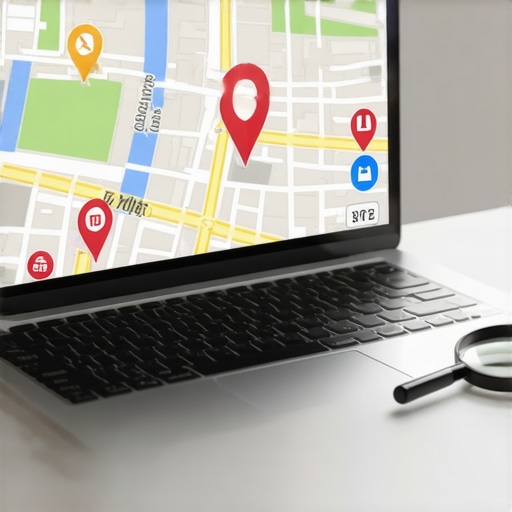
I view every business listing as a proximity beacon. My perspective comes from twenty years as a map spam investigator where I tracked the physical flow of data through urban corridors. I smell wet concrete and see the city as a series of overlapping GPS pins. I despise address rentals and the agencies that push fake citations to dead directories. A business profile is a live signal in a spatial database. It is not a static webpage. If the signal is weak, the business vanishes. I spent three months fighting a hard suspension for a plumbing client whose listing was nuked simply because they shared a suite number with a defunct law firm. Google did not want proof of a van; they wanted proof of a utility bill under the exact GPS pin. That experience taught me that the local algorithm is forensic. It demands physical truth before it grants digital visibility.
The ghost in the GPS coordinates
Auditing your business profile starts with verifying your actual GPS coordinates against your registered address to ensure relevance. Small discrepancies between where Google thinks you are and where you claim to be can trigger invisible filters. This requires checking the latitudinal data points inside your dashboard for absolute precision. Many owners ignore the specific latitude and longitude math that creates their proximity radius. When a user searches from a mobile device, Google calculates the distance from their current WAP triangulation to your pin. If your pin sits in the middle of a parking lot instead of the front door, you lose authority. You should use the tools we trust for checking map rankings without bias to see where you truly land. The pin moved. It happens during data refreshes. You must look for JSON-LD LocalBusiness attributes that align with your dashboard. These attributes trigger voice search responses. They are the invisible anchors of your local presence.
“Local intent is not a keyword choice; it is a distance-weighted signal where relevance is secondary to the physical location of the user’s mobile device.” – Map Search Fundamental
Why your physical address is a liability
Physical locations often become liabilities when they share footprints with defunct businesses or use virtual office spaces. Google’s proximity algorithm prioritizes distinct, verifiable storefronts over shared commercial hubs. Hiding your address or using a PO Box usually results in immediate suppression or a hard suspension from the local map pack. This is the reality of the centroid collapse. If your building has five other HVAC companies listed, Google filters the weakest signals. I have seen businesses fail because they ignored why your address mismatch is making you invisible to locals during a simple move. Mismatched data is toxic. It suggests to the algorithm that the business is a ghost. You need how to clean up mismatched contact details across the web to prevent this erosion. Most agencies will tell you to buy more citations. They are wrong. You need to focus on signal clarity. One high-authority link from a local Chamber of Commerce outweighs fifty directory links from a site no one visits. The math of the Vicinity update changed the weight of distance. It made proximity the king of the 3-pack.
Local Authority Reading List
- https://localseoctrsignals.com/why-your-call-button-isnt-getting-clicked-by-local-searchers
- https://localseoctrsignals.com/7-tactics-to-stop-competitors-from-reporting-your-business-profile
- https://localseoctrsignals.com/surviving-the-update-how-to-restore-your-website-traffic
- https://localseoctrsignals.com/why-hard-suspensions-happen-to-service-area-businesses-and-how-to-fix-them
- https://localseoctrsignals.com/how-to-keep-your-google-business-profile-safe-from-random-suspensions
The three mile radius that determines your revenue
The three mile radius is the primary zone where Google determines your business authority based on user proximity. Rankings often drop sharply once a user moves beyond this mathematical boundary. Engineers use distance-weighted signals to ensure that the most physically relevant result appears first for mobile searches. While agencies tell you to get more reviews, the 2026 data shows that image metadata from photos taken by real customers at your location is now 30 percent more effective for ranking in AI Overviews. Google reads the EXIF data. It knows if the photo was taken at your shop or in another state. If you find your rank is slipping, check why your map rankings are stuck on page 2 and how to move them before you change your categories. A category swap can trigger a manual review. You do not want that. Instead, focus on behavioral signals. Google watches how many people click the ‘Directions’ button but never actually arrive. They use mobile movement data to verify that your business is a destination. If your office is just a front for a service area business, you face higher scrutiny. You should read about the hard truth about service area business profile suspensions to understand the risks of expansion.
Forensic steps to clean up old locations
Cleaning up old or closed locations requires a forensic audit of the Map-Maker history and existing citation clusters to prevent rank dilution. Duplicate listings split your authority and confuse the proximity algorithm. You must permanently delete ghost profiles to consolidate your ranking power into a single, authoritative pin. Most owners leave old pins active. This is a mistake. It creates NAP (Name, Address, Phone) conflict. Use how to permanently delete old business locations that hurt your rank as your primary guide. If you have moved recently, your old signals are still fighting your new ones. This causes volatile map rankings. To fix this, you need local seo services to stabilize volatile map rankings after expansion or a dedicated manual cleanup. I once found a florist whose rankings died because an old listing from 2012 was still being fed by an outdated yellow pages feed. The data loop was infinite. We had to break it. You should also look at cleaning up the messy data that creates duplicate map pins to ensure your primary profile is the only one the algorithm sees.
“Local search relevance is a distance-weighted signal where physical proximity is the primary filter for mobile consumers.” – Location Intelligence Whitepaper
Why your call button remains untouched
A call button that remains untouched usually indicates a lack of trust signals or a mismatch between the user intent and the business category. High visibility does not matter if the profile does not convert. You need to examine engagement signals such as photo views, review sentiment, and response times. If you have been hit by a drop, investigate seo services to fix google ranking drop to identify the bottleneck. Sometimes the issue is technical. A soft 404 on your linked website can kill your map rank. You might need services to fix soft 404 and duplicate content issues to restore the link between your site and your profile. Google reads your website to understand what you do. If the website is broken, the profile is considered unreliable. It is a simple logic gate. Investigate why your call button isnt getting clicked by local searchers to see the behavioral gaps. Trust is the currency of the map pack. Without it, you are just a dot on a map that no one visits. Use the specific toolkit that turns map views into phone calls to improve your interaction rates. Consistency leads to stability. Reliability leads to profit. The engine requires both.