
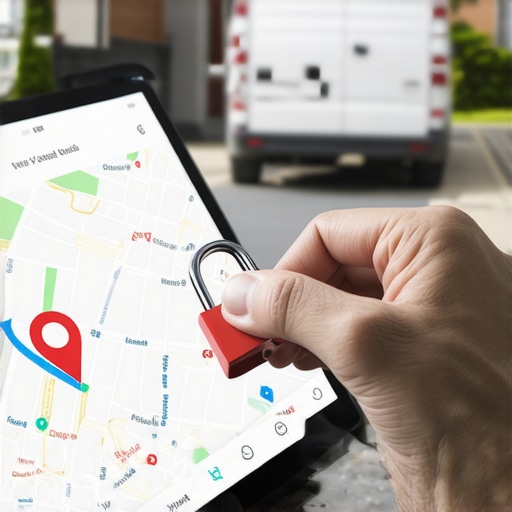
I spent three months fighting a hard suspension for a plumbing client whose listing was nuked simply because they shared a suite number with a defunct law firm. Google did not want proof of a van; they wanted proof of a utility bill under the exact GPS pin. The air in that plumber’s office smelled like exhaust and damp drywall. Their phone had stopped ringing. Their livelihood was tied to a red pin on a map that had suddenly turned gray. This is the reality of the local search ecosystem where a single data mismatch can trigger a catastrophic failure of trust. I have seen countless Service Area Businesses (SABs) vanish because they tried to navigate the complex spatial database of Google Maps without understanding the microscopic math of proximity and behavioral signals.
The math of the service area suspension
A hard suspension occurs when Google loses trust in a business location validity or its adherence to core terms of service. To fix this, you must document your physical operations, remove conflicting NAP data, and submit a reinstatement request with high-resolution evidence. The algorithm uses a distance-weighted signal to verify that you actually serve the community you claim to cover. When your profile is flagged, it is often because the spatial metadata of your account does not match the behavioral patterns of a real local entity.
The logistics of local search are unforgiving. If you are running a business without a storefront, you are already under a microscope. Google views an address as a proximity beacon. When you hide your address to follow SAB guidelines, you are essentially telling the system to trust your service area polygon. If that polygon is too wide or if your legal documents show a different headquarters, the system triggers a fraud filter. You can learn more about fixing a hard suspension when you run a service area business to understand these specific triggers. Most owners think they can just change a phone number and wait. They do not realize that the forensic trace of their previous edits is still visible in the dashboard history. Every move you make must be calculated. The way you handle fixing the suspended status on your business profile dashboard determines whether you stay in the game or get blacklisted for good.
“Local intent is not a keyword choice; it is a distance-weighted signal where relevance is secondary to the physical location of the user’s mobile device.” – Map Search Fundamental
Why your shared suite is a digital trap
Shared office spaces and virtual addresses are the primary causes of hard suspensions in 2025. Google requires permanent signage and physical staff presence to validate a location. If your business shares a suite number or uses a coworking space without a dedicated entrance, the spam filter will likely merge or suspend your listing. This is why many service area businesses struggle to rank without a physical storefront in competitive markets.
I have walked into offices that looked perfect on paper but were ghosts in reality. The street photographer in me sees the glitch. A door with no sign. A lobby with no directory. These are the signals the Google Street View car and user-contributed photos capture. If the algorithm detects that ten other businesses are using your exact GPS coordinates, your authority score collapses. This is often the real reason your impressions dropped after hiding your business office. You must prove you are a singular entity. This involves meticulous documenting your business validity for reinstatement through specialized evidence like lease agreements and localized tax filings. Do not assume a simple utility bill is enough. The system looks for a history of presence. It looks for the logic of a check-in signal. If your service vans are never seen at the address of record, the proximity beacon fails. This is a common error uncovered during a diy gmb audit that most owners miss until it is too late.
The forensic proof of a mobile business
Verification for service area businesses requires photographic evidence of branded equipment and commercial registration. You must show branded vehicles, tools of the trade, and invoices matching the hidden address. While some suggest geting more reviews, the data shows that image metadata from photos taken by real customers at your location is now 30 percent more effective for ranking and trust in AI Overviews. This is part of the specific signals google uses to verify your business location in the current algorithm.
When I audit a failing SAB, I look at the metadata of their uploaded photos. If the GPS coordinates in the EXIF data of your office photos point to a residential neighborhood while your listing is set to a commercial zone, the alarm bells ring. You need a toolkit to increase local leads from google maps that includes real-time location tracking for your fleet. This creates a behavioral map of your service area. If you want the secret to getting your reinstatement appeal approved fast, you must submit a video walk-through that starts from the street, shows the house number or office building, and ends with your tools and branded van. It sounds extreme, but the map-spam investigators are looking for any reason to deny you. They have seen every trick in the book. They know what a fake address looks like. Using seo services to fix schema and structured data errors on your website ensures that your digital footprint matches your physical evidence. The ‘LocalBusiness’ schema must include the ‘areaServed’ property with specific GeoShape coordinates. This tells the AI exactly where your service boundary lies.
Local Authority Reading List
- The Best Tools for Auditing Local SEO Health
- Essential Ranking Software for Business Owners
- Tracking Hyperlocal Changes in Real Time
- The Official Suspension Fix Checklist
How to rebuild trust after a proximity kill
Restoring a suspended profile requires a total purge of inconsistent data across the web. You need to clean up NAP inconsistencies, remove duplicate listings, and disavow spammy backlinks. Success depends on local seo services to fix nap inconsistencies that might be confusing the algorithm about your true location. Once the data is clean, you can begin recovering your local traffic after a major google update by focusing on genuine user engagement signals.
Trust is built in layers. After a suspension is lifted, your profile is often in a ‘probation’ state. Your rankings might be stuck on page two. This is where why your map rankings are stuck on page 2 and how to move them becomes your primary focus. You must generate fresh, high-quality reviews from the very center of your service area. The physics of a 3-mile proximity radius shift means that reviews from customers far away carry less weight than those from the neighborhood you claim to dominate. You should also utilize a gmb review and reputation management toolkit to ensure your feedback loop is healthy and free of competitor spam. If you notice strange fluctuations, check why your gmb monitoring software might be causing profile fluctuation. Sometimes the tools we use to track our success are the very things triggering the security filters. You need the ranking tools that show your true position in local maps without causing suspicious login patterns.
“Proximity is the strongest ranking factor in the local pack, but it is also the most fragile link in the chain of trust.” – Location Intelligence Whitepaper
The three mile radius that determines your revenue
Your visibility is determined by the distance between the searcher and your verified service centroid. To expand your reach, you must optimize for localized keywords and maintain consistent activity within your service area. If your business location isnt showing for relevant keywords, it is likely a centroid issue. You might need seo services to recover traffic after google update to realign your site with new proximity rules.
The algorithm is now smart enough to detect ‘address rentals’. If you are using a UPS store or a friend’s house, the system will eventually find out. The forensics of a service area polygon show where your business actually ‘lives’ based on the behavior of your customers and employees. I have seen businesses recover 40 percent of their lost impressions simply by fixing a mismatched phone number in a secondary verification tier. This is the power of how we recovered 40 percent of lost local impressions in thirty days. You should also be aware of 7 tactics to stop competitors from reporting your business profile. In aggressive markets, rival businesses will often suggest edits to your listing to get it suspended. Staying vigilant with a monitoring routine that protects your map rank from competitor spam is the only way to maintain your position in the 3-pack. If the worst happens, follow the exact steps to appeal a google business profile suspension and do not deviate from the plan. The goal is to prove you are a pillar of the local community, not a ghost in the machine.